Sump Pits and Sump Pumps in Indianapolis and Central Indiana
A sump system is three things working together: the pit that collects the water, the pump that lifts it, and the line that carries it away from the building.
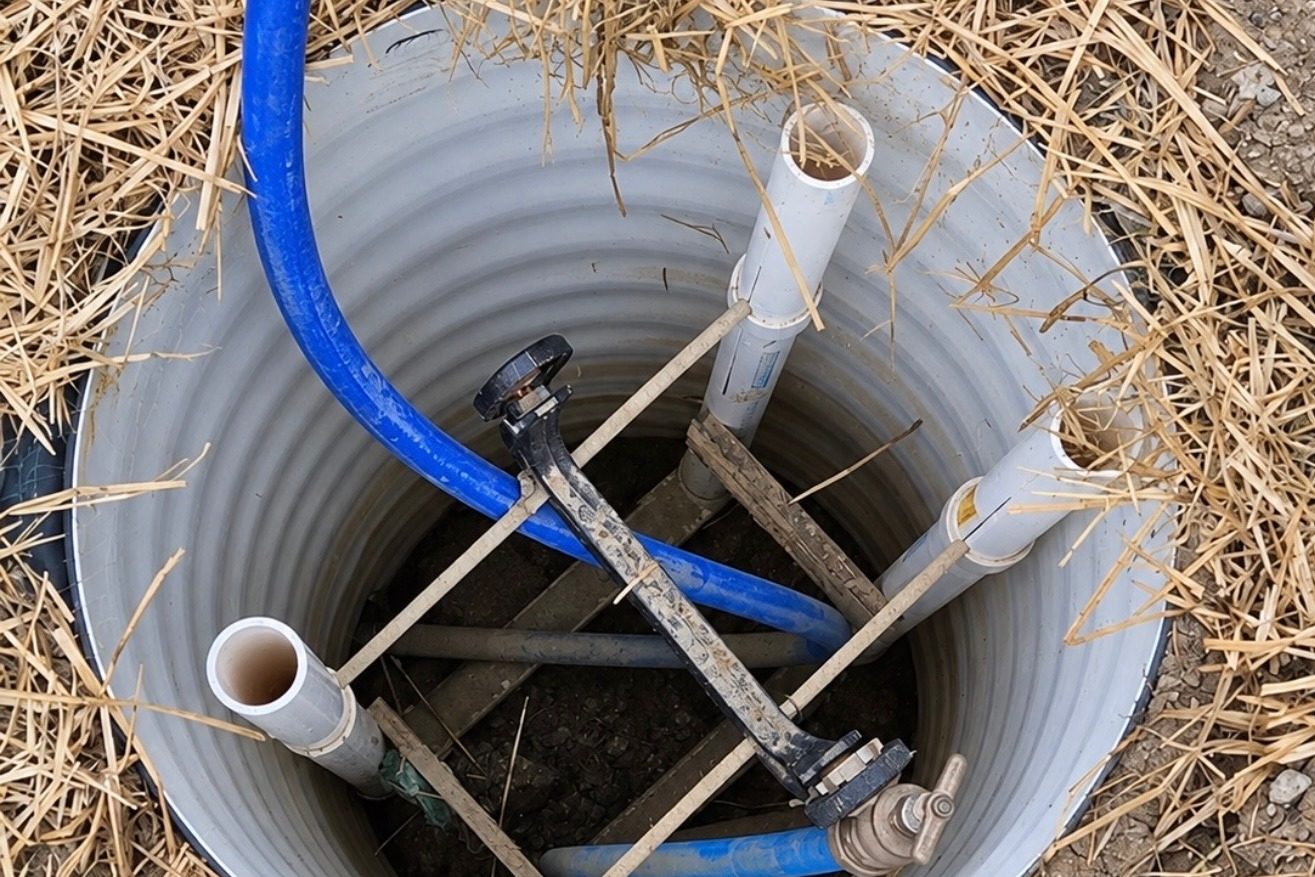
A sump pit is a lined basin set at the low point of a basement or crawl space that groundwater collects in, and the pump lifts that water out to a discharge line. We set pits, install and replace pumps, and run the discharge so the water leaves the building instead of circling back to it.
Basements in this part of Indiana sit in ground that holds water. Heavy glacial till with a lot of clay drains slowly, so after a long rain the water does not sink away, it stacks up against the foundation and looks for a way in. A sump pit gives it a place to go that is easier than your floor, and the pump makes sure the pit never wins.
Most of the calls we get are about one of the three parts. The pump has quit or is short cycling. The pit is undersized, silted in, or was never really set at the low point of the floor. Or the discharge line is the problem: it freezes at the outlet, it has been crushed, or it dumps water two feet from the wall so the same water walks back around and shows up in the pit again an hour later. Fixing a pump when the discharge is the fault buys you nothing.
So we look at the whole system rather than the part that is making noise. That means reading where the water is actually arriving from, where the low point of the floor really is, how far the water has to be carried to be gone for good, and whether the ground outside is helping or fighting you. Then the scope goes in writing and the work gets scheduled.
How a sump system job runs
Describe it to the office
Tell us what the basement is doing, how old the pump is, and where the discharge currently comes out.
Scope and area check
We confirm the property is in our service area and work out whether this is a pump, a pit, a discharge run, or all three.
We come look at it
On site we find the low point, trace the existing discharge, and read the outside grade the water has to cross.
Written estimate
The estimate names the pit, the pump, the discharge route and the outlet, so nothing about the finished system is a surprise.
Scheduling, permits and locates
Any permit or inspection your community requires is arranged by the office, along with the Indiana 811 locate before any outside digging.
Install, test and close out
The crew sets the system, keeps you informed as it goes, and the job ends with a final inspection and the invoice.
Where basement water comes from
Almost none of it is dramatic. Rain lands on a roof and a lot, the clay underneath cannot take it away quickly, and the water sits in the top few feet of ground pressing against every wall it can find. A basement wall is the coolest, easiest surface in that whole system, so that is where the water shows up. The pump is not fighting a flood, it is fighting a saturated yard, which is why it runs long after the sky has cleared.
That is also why the discharge matters more than people expect. If the pump lifts water out and drops it in the same saturated ground beside the foundation, it has not removed anything, it has started a loop. The water works back down, hits the wall, arrives in the pit, and the pump lifts it again. A pump that never seems to shut off is often a discharge problem wearing a pump problem's clothes, and moving the outlet to somewhere lower and further out solves what a new pump would not.

What this does not cover
We install the pit, the pump and the discharge line, and we handle the ground outside. We do not do interior finish work, so drywall, flooring and anything that has to be rebuilt in a finished basement is a remodeling contractor's work. New electrical circuits or panel work for a pump are an electrician's lane. Interior wall coatings and sealed membrane systems sold as basement waterproofing are also not what we do; our answer to basement water is a working sump system and correct drainage outside.
Sump Pit and Pump Questions
My pump runs almost constantly after a rain. Is it failing?
Maybe, but check the discharge first. If the water is being put back into saturated ground close to the foundation, it returns to the pit and the pump lifts the same water over and over. A pump running long after a rain in clay ground can also be perfectly normal, since the yard stays full of water for a while. We can read which one it is when we look at the outlet and the grade.
Can you add a second pump or a backup?
Yes. Setting a pit so it can carry a second pump or a battery backup is a common request, especially where a basement is finished or a failure would be expensive. It is easier to build that in when the pit goes in than to add it later, so it is worth raising when the office takes your details.
Do I need a pit if my crawl space is only damp?
Not necessarily. Damp crawl spaces sometimes come down to surface water that is never getting away from the building, in which case the fix is drainage and grade outside rather than a pit inside. Standing water in the crawl space is a different conversation. We look at both before recommending anything, because the cheaper fix outside is often the right one.
What happens to the discharge line in winter?
That is the part that gets overlooked. An outlet that sits in a low spot or points into a slope can ice over, and once the outlet is frozen shut the pump has nowhere to send water. Where the line runs, how it falls and where it ends are chosen with that in mind, and it is one of the things we set on site rather than guessing at from the office.
Sump Pit and Pump Work, in Their Words
Left on our Google profile by the people we did the work for.
“Even getting excavation folks to come out to consider your project can be a hassle when people are busy. It requires a resetting of expectations particularly in good weather. Matt got out to look over our project after about a month and a half of waiting and gave me a good thorough review and solid quote on the work. While our entire project wound up lasting over six months, it was not the fault of Wharff. A simple basement drainage issue with trenches, pipes, new concrete and a new sump pump turned into a second project that included them digging out an area of our basement for a new bathroom. They were willing to dig out the area that we weren't 100% certain would work for the bath with my assurance that I'd hold myself to blame if it simply didn't work. They were patient and flexible when I simply could not get a plumber out to do the work and again when the digging out of that area impacted their prior work on the drainage which required some adjustment to the sump pump. And despite all of the debris, dirt, concrete and lots of feet walking up/down our stairs and out the door with loads and loads of everything involved, Noble and his team kept the space reasonably clean and well kept. There will always be room for improvement with any team and ups and downs that they deal with. Scheduling can be difficult, but Lisa kept us reasonably informed of if/when their team would be at/in our home for the work. The occasional hiccup when I had to leave or they had to run to another site is easily overlooked when they really continually did great work all around. Overall, the two projects cost us a good used car worth of money, but the work they did and the professionalism they displayed throughout made it the easiest checks we've written. These folks do hard work and do it well. You can count on them to deliver.”
“The team at Wharff Excavating did a wonderful job with fixing my clogged sump drain line and with installing a new sump pump. I am very satisfied with the team's skills, expertise, professionalism, analysis, honest advice, work and customer service. I highly recommend Wharff Excavating for any such services. Thank you, team Wharff! You guys are the best!”
Request a Sump Pit and Pump Estimate
Tell us where it is and what it is doing. If you have photographs of the problem, send those too.
We look at it on site before we quote it, and the estimate comes to you in writing.