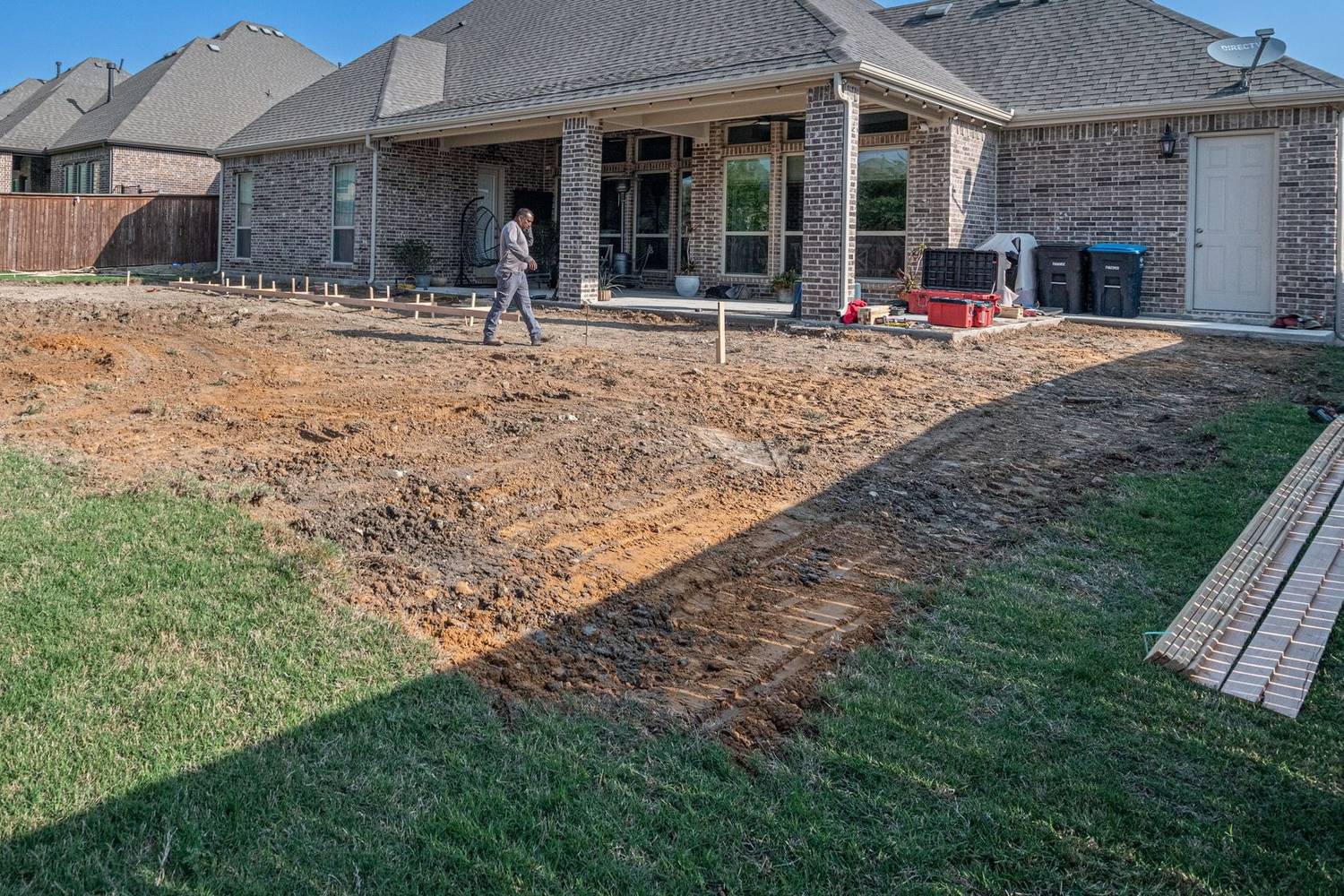
Erosion Control in Indianapolis and Central Indiana
Soil leaves a property one storm at a time, and by the time a bank or a slope looks like a problem it has usually been moving for years.
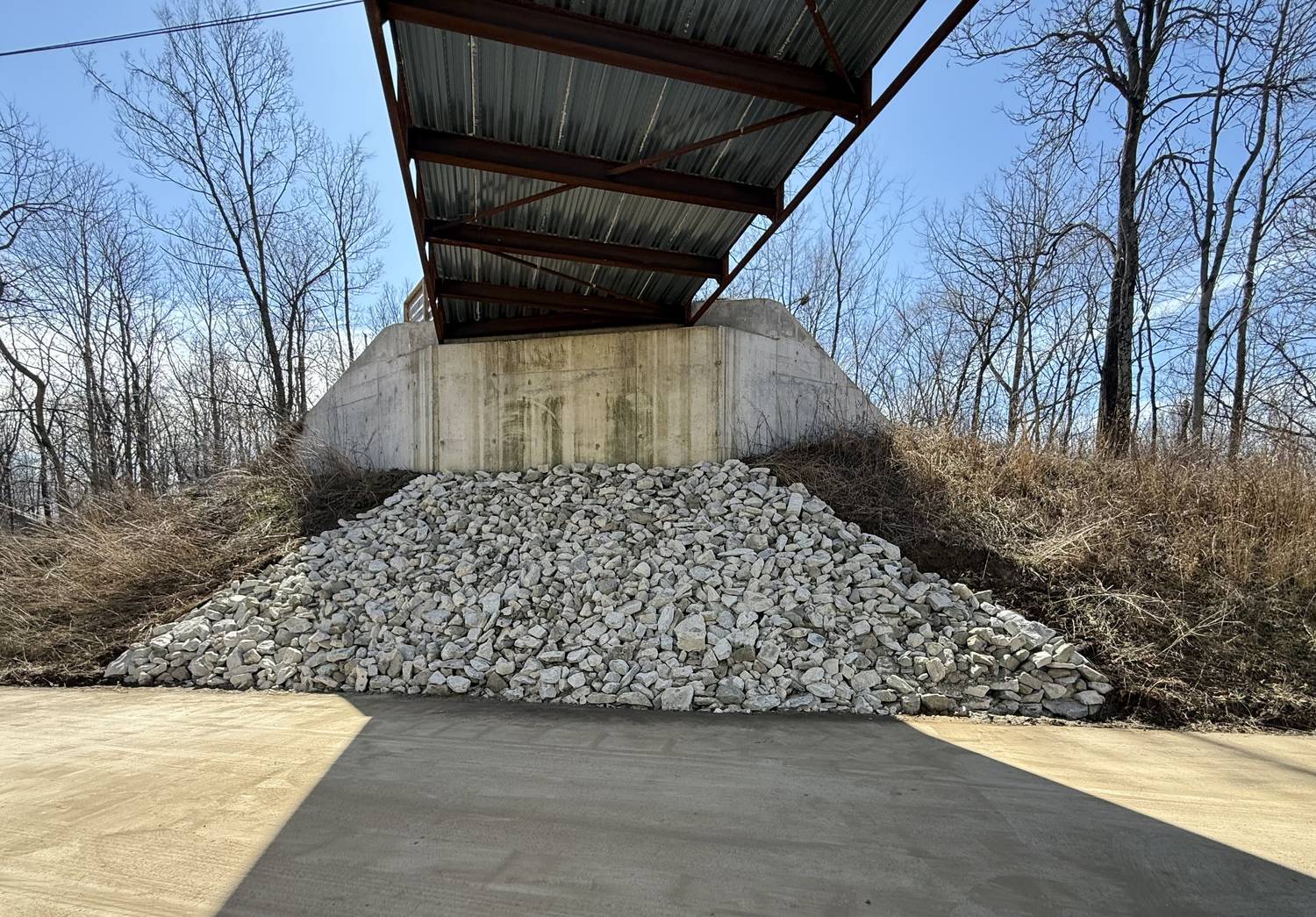
Erosion control keeps soil where it belongs by slowing water down, holding bare ground in place and armoring the spots where moving water hits hardest. On a job site that means containment while the ground is open. On a slope or a creek bank it means changing what the water is allowed to do.
Water does not carry soil away because it is wet. It carries soil away because it is moving, and the faster it moves the more it takes. That single fact drives every method used here. Spread the flow out instead of concentrating it. Slow it down before it reaches bare ground. Cover the bare ground so raindrops are not landing on loose soil. Armor the places where you cannot slow the water down at all.
On an active job site the concern is short term and immediate: the ground is open, there is nothing growing on it, and the next rain will move it into the street, the ditch or the neighbor's property. Silt fence, inlet protection and a controlled entrance keep the site's soil on the site while it is vulnerable. On finished property the concern is long term: a slope that keeps rilling, a swale cutting itself deeper every season, a creek bank that has taken several feet of a field or a back yard.
The work runs from seeding and matting on a raw slope to riprap and structural bank protection where a stream is actively cutting, with regrading in between where the shape of the ground is the real cause. Which of those a site needs is not something to decide from a photograph, so we read it on the ground before quoting it.
How an erosion control job runs
Tell the office what is moving
Where the soil is going, how fast it has changed, and whether this is an active site or finished property.
Service area and scope
We confirm the property is in our area and work out whether this is site containment, slope stabilization or bank work.
We walk it after we have talked
On site we trace where the water comes from, how it concentrates and what it is hitting, because that is what sets the method.
Written estimate
The estimate names the measures, where each one goes, and what the finished ground is meant to look like.
Scheduling, permits and inspections
The office arranges permits and any inspection required, plus the Indiana 811 locate before digging begins.
Install, stabilize and close out
The crew installs the work and keeps you informed, and the job closes with a final inspection and the invoice.
How a bank starts to go
It rarely begins at the bank. It begins uphill, where something concentrates water that used to be spread out: a downspout, a driveway, a swale that was cut a little too straight, a bare patch that stopped growing anything. Concentrated water arrives with more energy than the ground can absorb, and it starts taking the soil at the point of impact. Once a small channel forms it collects more flow, and the channel deepens itself every storm. That is why treating only the visible damage tends not to hold.
Along a creek the same logic runs sideways. Moving water undercuts the toe of a bank, the material above loses its support, and a section drops in. The bank then looks like it failed from the top, which sends people to fix the top. The repair that lasts starts at the bottom, holding the toe with stone where the water is working, and then dealing with the slope and the cover above it. Reading which of those is happening is most of the value of coming out to look.

What this does not cover
Where a project requires an engineered design, that design comes from an engineer and we build to it, because engineering a structure is a different profession from installing it. Work in or along a regulated waterway can require review by an agency, and where that applies the review has to happen before the work does. Ornamental landscaping, planting design and lawn installation are a landscaper's work. We deal with the soil, the grade, the water and the structures that hold them.
Erosion Control Questions
Does an active job site need erosion control?
It is commonly written into the conditions on a site permit, and the inspection that follows is one of the things we handle as part of running the job. Beyond the paperwork there is a practical reason: soil that leaves an open site ends up in a street, a ditch or a neighboring property, and cleaning that up costs more than containing it did.
My creek bank has taken several feet of yard. Can it be stopped?
Usually, but the repair has to address the toe of the bank where the water is doing the cutting, not just the top where the damage shows. That may mean armoring the toe with rip rap stone, reshaping the slope above it and getting cover established. It also may mean an agency review depending on the stream. We come look, tell you what the water is actually doing, and put the scope in writing.
Is seeding enough on its own?
On a gentle slope with the water spread out, established cover does a great deal of the work. On a steeper face, or anywhere water arrives concentrated, seed alone washes off before it ever roots and the effort is wasted. Matting, regrading or armoring keeps the soil still long enough for cover to take hold. Which combination a site needs depends on the slope and where the water comes from.
Do you work for builders and municipalities on this?
Yes. Builders, general contractors, businesses and municipalities are a regular part of this work, as are homeowners with a slope or a bank that has started moving. The process is the same either way: the office takes the details, we read the site in person, and the scope is written down before anything is scheduled.
Erosion Control Work, in Their Words
Left on our Google profile by the people we did the work for.
“Wharff Excavating did an amazing job installing rip rap for erosion control on my property. Their crew was very professional, efficient, and clearly experienced. They handled the excavation work with precision, prepared a solid base, and placed the rip rap exactly the way it should be for long-term stability. The results speak for themselves. The bank is reinforced, water flow is managed properly, and the entire area looks clean, sturdy, and professionally finished. Wharff Excavating takes pride in their work, and it shows in every detail. If you need erosion control, excavation, grading, or any type of dirt work done right the first time, I highly recommend Wharff Excavating!”
“I have never been more pleased with a project than the work performed by Wharff. I was excited with their proposal for solving my erosion problem and they even exceeded what they promised. Professional staff, and a courteous crew. Highly recommended.”
Request a Erosion Control Estimate
Tell us where it is and what it is doing. If you have photographs of the problem, send those too.
We look at it on site before we quote it, and the estimate comes to you in writing.