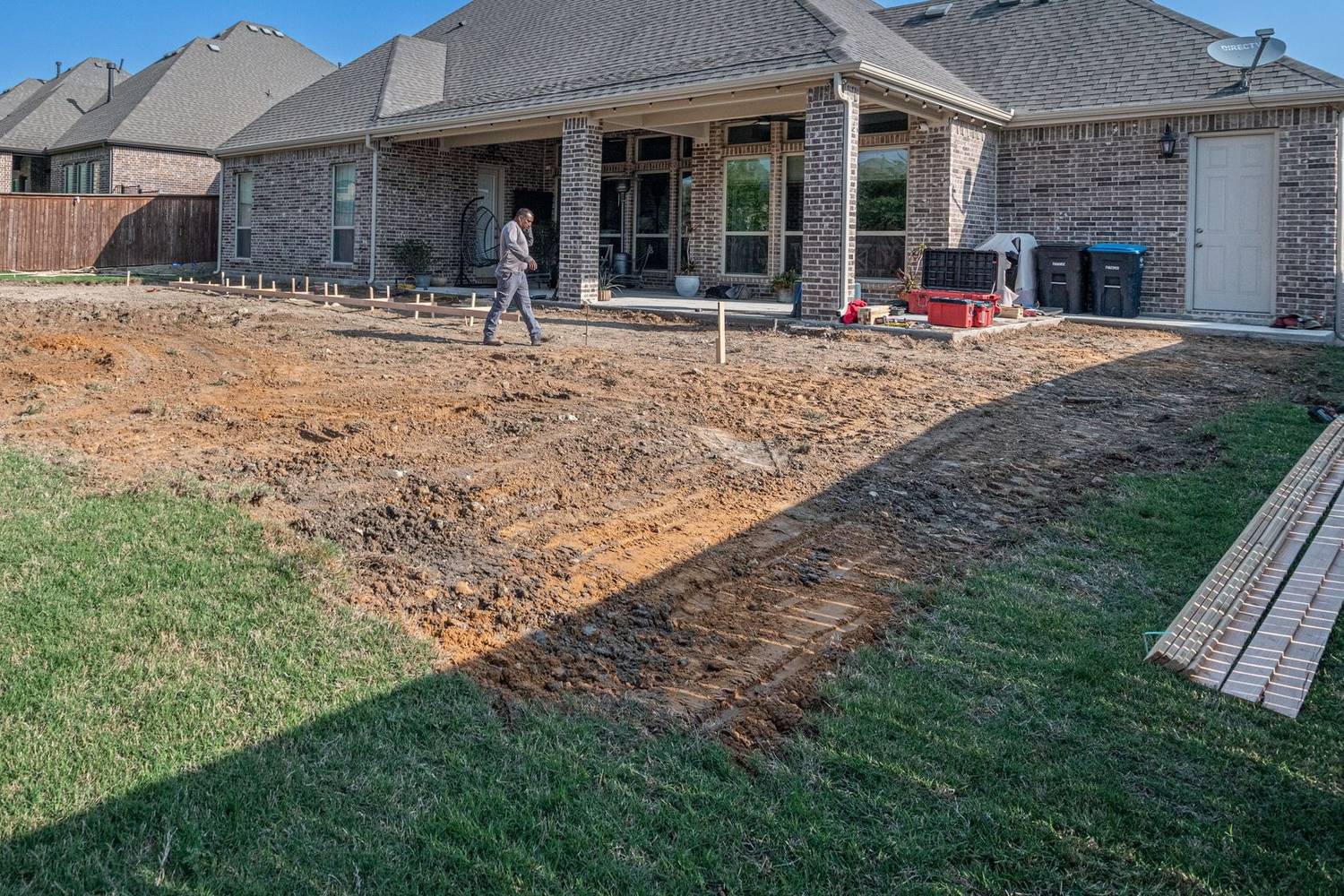
Carbon Fiber Strapping for Bowing Basement Walls in Central Indiana
Carbon fiber straps are bonded to the inside face of a foundation wall to hold it where it is and stop a bow or a crack from getting any worse.
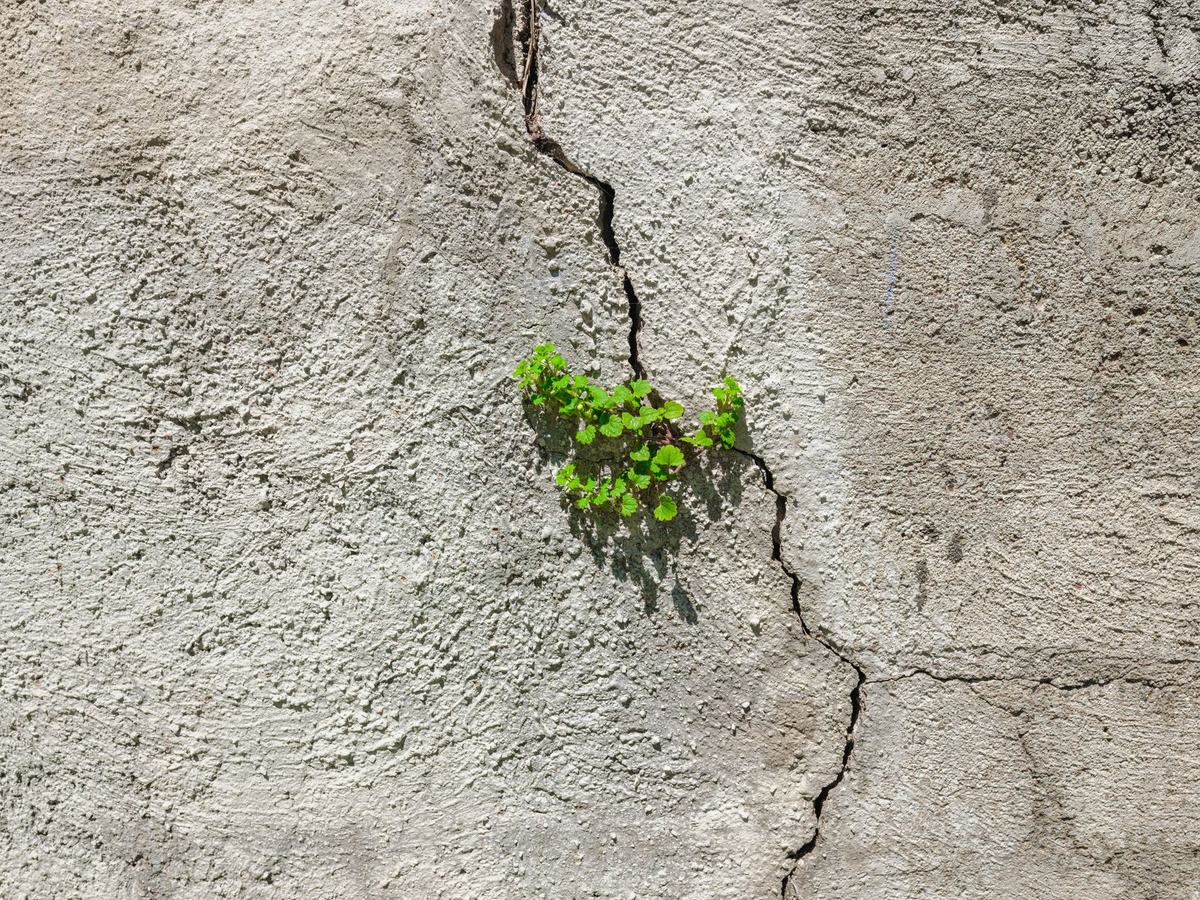
Carbon fiber strapping reinforces a basement wall that is bowing or cracking. The straps bond to a prepared wall face and resist the sideways load pushing the wall inward, so the purpose is to stop further movement. Straps are reinforcement. They are not a method for pushing a wall back to where it originally stood.
Almost every bowing basement wall in this part of Indiana has the same story behind it, and the story is water in clay. Clay soil swells when it takes on water and it does not give that water up quickly. Saturated soil against a foundation wall pushes horizontally, the push does not let up between rains, and a wall that was built to carry weight downward is being asked to resist a load coming at it from the side. Add frost reaching down around thirty two inches into that same wet soil and the loading gets worse again every winter.
The wall tells you what is happening if you read it. A horizontal crack running along the wall partway up, usually somewhere near the middle third of its height, is the classic signature of that sideways load. Stair step cracking through the mortar joints in a block wall is another. A wall face that is visibly no longer flat, or a straight edge held against it that shows daylight in the middle, means movement has already happened. Carbon fiber straps are bonded vertically across that region to carry the tension the wall itself can no longer carry alone.
The part of this that is genuinely our trade is the outside. We are an excavation and drainage contractor, so the work we do is the work that addresses the cause: getting the ground around the house to fall away from it instead of toward it, dealing with roof water that is being dumped against the foundation, and putting drainage in where water has nowhere to go. Reinforcing a wall while the same water keeps loading it is treating half the problem. The straps hold the wall. The drainage takes the pressure off it.
How a wall reinforcement job is handled
The office takes the description
Describe what you are seeing on the wall, roughly where it is and how long you have noticed it, and the office records it.
Scope and service area
We confirm the property is in our area and work out whether this is a wall question, a water question, or both, which it usually is.
Looking at the wall and the ground outside
We come out and look at the wall itself and then walk the outside, because what is pushing on the wall is almost always visible from the yard.
Written estimate
You get a detailed written estimate covering the reinforcement work and any excavation or drainage work needed outside.
Permits, locates and the schedule
We take care of permits, utility locates and inspections and put the work on the schedule.
Work done and walked through
The work goes in with you kept informed throughout, and the job closes with a final inspection and the invoice.
Water is usually what moved the wall
A foundation wall is holding back soil, and how hard that soil pushes depends almost entirely on how wet it is. Dry clay against a wall is a manageable load. The same clay saturated after a wet spring is a much larger one, and the water itself adds pressure on top of the soil. That is why so many walls that stood still for decades start moving after a few unusually wet years, or after a downspout came apart and nobody noticed, or after a patio got added and quietly changed the way the yard drained.
It is also why the outside work matters as much as the reinforcement. Ground that falls toward the house delivers every rain straight to the wall. Roof water discharging at the foundation instead of well away from it concentrates an enormous volume in one small area. A window well with no drainage becomes a container. None of that is repaired from inside the basement, and none of it stops on its own. Reinforcement stabilizes what the water already did, and the drainage work is what changes what happens next.

Where an engineer takes over
We are not structural engineers and we do not issue structural opinions or stamped drawings. Whether a particular wall can be reinforced in place, or has gone too far and needs more than reinforcement, is an engineering judgment and it belongs to a licensed engineer. We will say plainly when what we are looking at is past the point where strapping is the right answer, rather than selling you the work anyway, and we will not pretend that reinforcing a wall repairs the drainage problem that moved it.
Carbon Fiber Strapping Questions
How do I know whether my wall is actually moving?
Look for a horizontal crack running along the wall partway up, or stair stepping through the mortar joints of a block wall. Then check whether the wall is still flat by holding a long straight edge against it. New cracks, cracks that are widening, or a face that is visibly no longer plumb all mean movement rather than the ordinary settling cracks most houses have.
Will straps push the wall back straight?
No, and anyone saying otherwise is describing a different operation. Carbon fiber reinforcement is about arresting movement, which means holding the wall at the position it has reached and resisting the load that is trying to move it further. Straightening a wall is a much larger undertaking, usually involving excavating the outside to take the soil load off it entirely.
Do I need an engineer involved?
For anything beyond a hairline crack it is worth it, and on a wall with real movement in it we would rather you had one. An engineer evaluates the wall as a structure and says what it needs. That judgment is not ours to make, and having it answered properly means the repair is matched to the actual condition rather than to a guess.
Does reinforcing the wall fix the water?
It does not, and that is the part people are most often surprised by. The straps address what the water already did to the wall. The water itself is still arriving, still saturating the clay, and still pushing. Getting the grade to fall away from the house, moving roof water well clear of the foundation and putting in drainage where the yard has no outlet is what changes the load on that wall.
Request a Carbon Fiber Strapping Estimate
Tell us where it is and what it is doing. If you have photographs of the problem, send those too.
We look at it on site before we quote it, and the estimate comes to you in writing.