Pond Excavation and Repair in Central Indiana
Whether a pond holds water has far less to do with how deep it gets dug than with what the soil underneath it is actually made of.
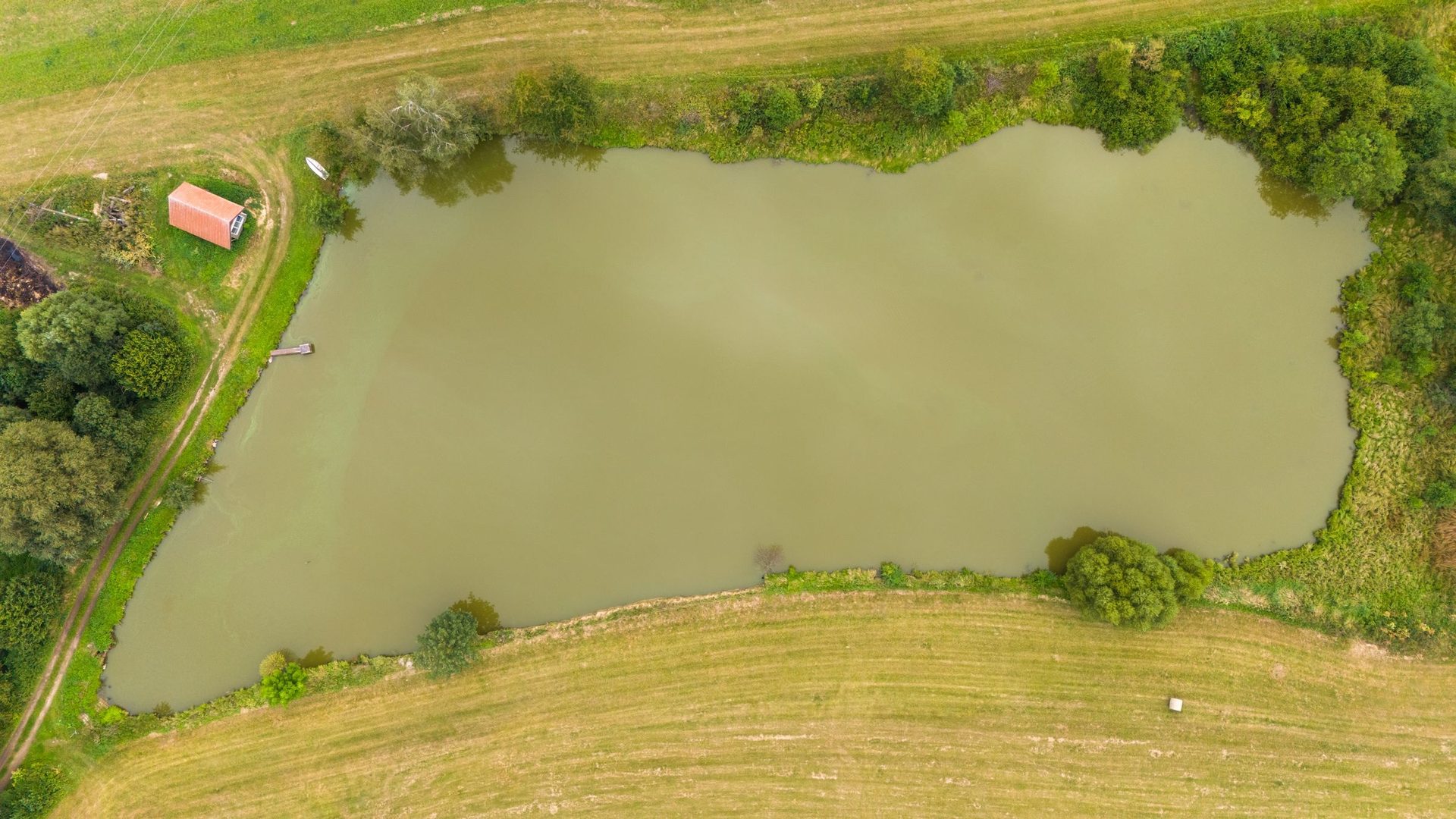
A pond holds water when it is dug into soil that will not let it drain away and when enough water reaches it to keep it full. Central Indiana clay is often well suited to that. The work is reading the site, shaping banks that stay where you put them, and giving the pond somewhere safe to overflow.
The first question on any pond is not size or shape. It is whether the ground will seal. A basin dug into sand or gravel drains as fast as you fill it, and no amount of shaping changes that. The heavy clay in the glacial till across this part of the state is generally the opposite problem in every other job we do and an advantage here, because clay is exactly what a pond bottom wants: fine material that water moves through very slowly. That is a site by site reading, not a guarantee, and it is one of the main things we are looking at when we come out.
The second question is where the water comes from and where the extra goes. A pond fed only by rain landing directly on it behaves very differently from one taking runoff off a large drainage area or sitting in ground where the water table is high. And every pond needs a planned place to overflow, because eventually it will. An overflow that has been designed and armored sends the extra water out along a route you chose. A pond with no overflow picks its own route, usually straight over the lowest point of the bank, and then cuts that point deeper every time it happens until the bank itself is failing.
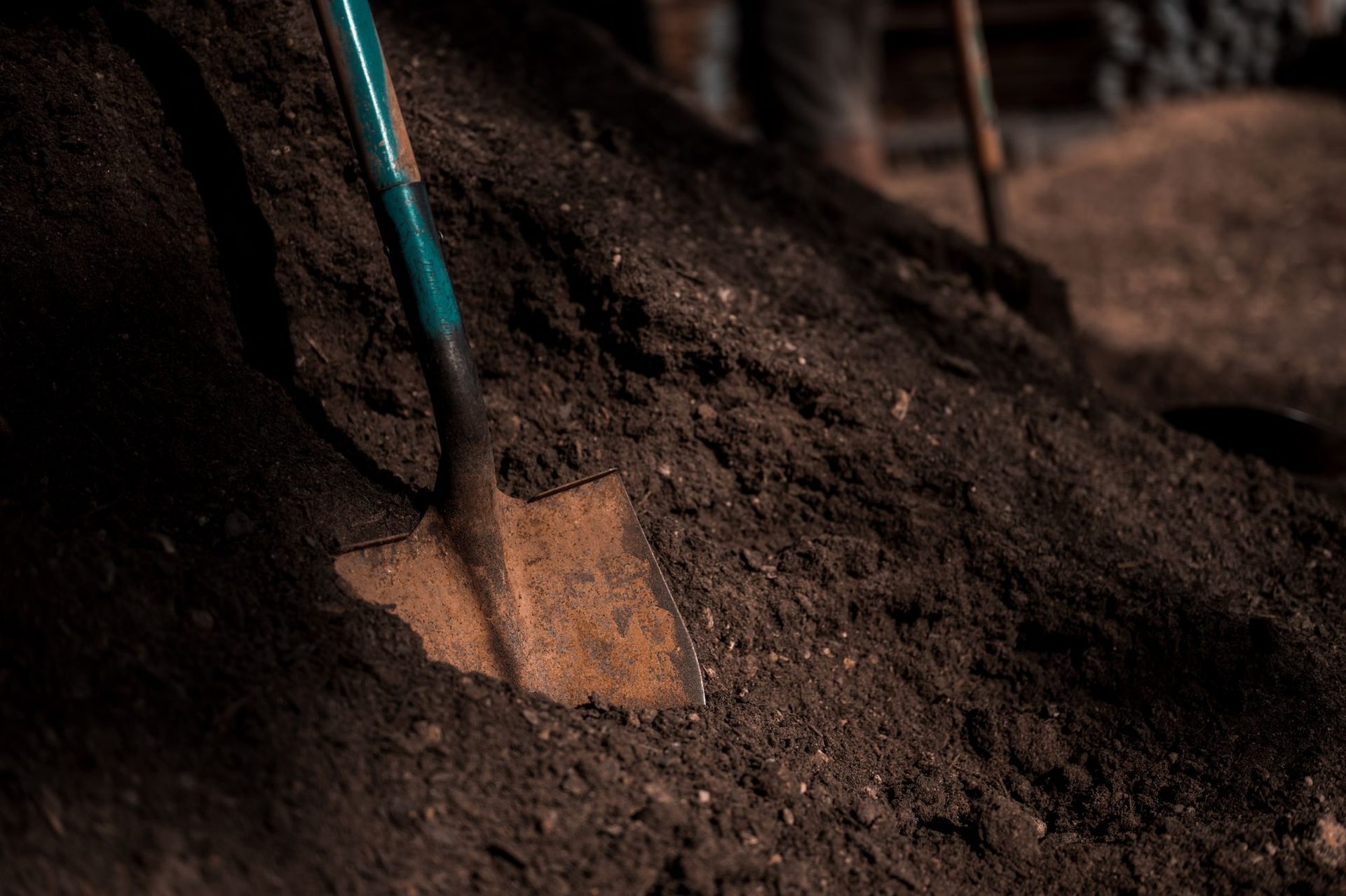
Then there is the material. A pond generates a very large volume of spoil, and that soil has to go somewhere on the property or off it. Where it lands is a real decision rather than an afterthought, because a badly placed spoil pile blocks drainage, kills a field for years, or leaves the site looking like a construction yard once the water is in. We also get called for older ponds that have silted in shallow, where the work is cleaning the basin back out and repairing banks that have slumped or been cut by wave action and livestock.
How a pond gets built
Telling the office what you want
Say what you are picturing and where on the property you are picturing it, and the office records it so we arrive knowing what the conversation is about.
Scope, area, feasibility
We confirm the property is in our service area and start working out whether the location can support a pond at all.
Out on the ground
We come look at the site, the soil, the slope and the drainage feeding it, since everything about a pond follows from what the ground is.
The written estimate
You get a detailed written estimate covering the excavation, the bank work, where the spoil goes and the overflow.
Permits and scheduling
We handle permits, utility locates and inspections and put the dig on the schedule.
Dug, shaped, closed out
The crew excavates and shapes the basin and banks and keeps you posted, then a final inspection and the invoice.
The two ways a pond goes wrong
The first is that it will not stay full. The water level drops after every dry stretch and never really recovers, and what looked like a pond in April is a mud flat in August. That is almost always a soil or a water supply problem, and it is a problem that has to be solved before the machine ever starts digging, because it is very difficult and very expensive to fix a basin that was put in the wrong ground.
The second is that the banks come apart. Banks cut too steep slump into the water and take the shoreline with them a little at a time, which makes the pond shallower and the edge dangerous. Banks with no protection where the overflow crosses them get cut into a notch, and once a notch starts it only grows. Both are shaping problems, which means both are decided during the dig, and both are far cheaper to build correctly the first time than to go back and repair after a wet spring has found the weak spot.

What a pond job does not include
We do the earthwork: the excavation, the basin, the banks, the spoil and the overflow. Stocking fish, aeration equipment, fountains, docks and shoreline planting are not ours. Neither is the regulatory ruling on the site itself. Whether a location involves a regulated stream or wetland is a determination the state makes, not one we make on your behalf, and where that question is live it gets answered before dirt moves rather than after.
Pond Questions
Will my ground actually hold water?
That is the question the whole project turns on, and it is answered on the site rather than from a map. Fine clay soil holds water well and this region generally has plenty of it, but soils change over short distances and a spot with sand or gravel under it behaves completely differently. Looking at the soil where you want the pond is part of coming out to see the job.
Where does all the dirt go?
Somewhere you have agreed to in advance. A pond produces a very large volume of soil, and the options are usually spreading and shaping it on the property, using it to build up a low area that needs fill, or hauling it off. Each of those has a different cost and a different effect on your land, so it gets decided during the estimate rather than on the day.
Can an old pond that has silted in be cleaned out?
Often yes. Ponds fill in from the edges and from whatever the inflow carries into them, and over enough years the usable depth quietly disappears. Cleaning one out means getting the accumulated material out of the basin and dealing with where it goes, and it is a good time to repair banks that have slumped and to look at why the silt is arriving in the first place.
Does a pond need somewhere to overflow?
Yes, every one of them. Water arrives faster than it leaves during a heavy rain, so the level will rise above full at some point, and the only question is whether it leaves by a route somebody designed or by cutting its own. A planned overflow is shaped and protected so the flow crosses without scouring, which keeps the bank intact.
Request a Pond Estimate
Tell us where it is and what it is doing. If you have photographs of the problem, send those too.
We look at it on site before we quote it, and the estimate comes to you in writing.