Land Clearing in Indianapolis and the Surrounding Towns
Clearing is not only cutting down what is standing. It is deciding what stays, getting the roots out, and leaving ground somebody can actually build on.
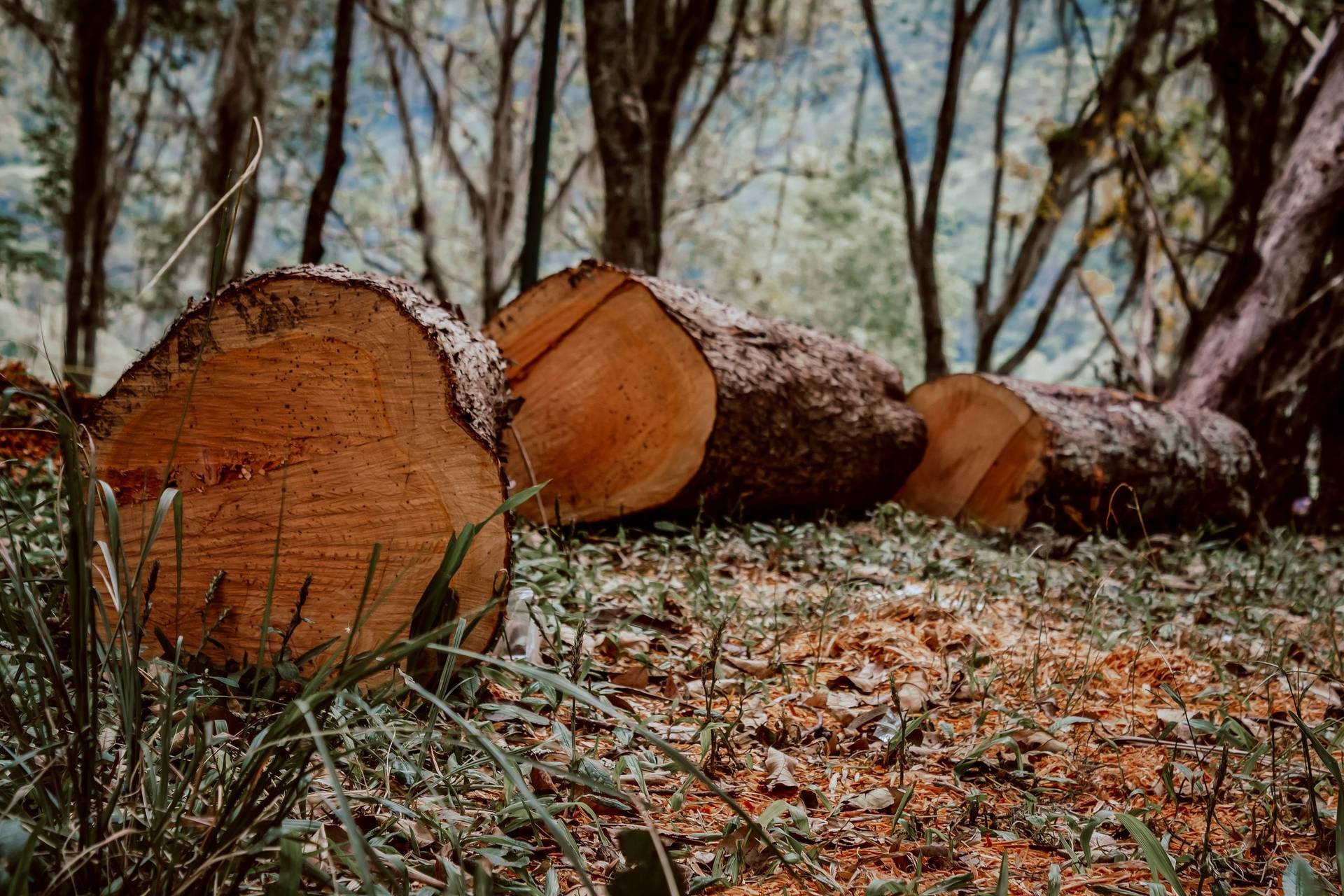
Land clearing takes trees, brush, stumps and old growth off a site so it can be built on, farmed, or simply opened back up. The part that decides whether the job was done well happens below the surface. Root balls and buried stumps left in the ground rot, settle, and pull whatever was built over them down with them.
The work comes in a few recognizable shapes. A wooded lot that somebody bought to put a house on, where the building pad and the drive and the yard all have to come out of standing timber. A fence row that has gone from a line of trees to twenty feet of impenetrable brush eating into a field. A property that has simply been left alone for two decades and is now unusable. And commercial or municipal ground where an old site is being taken back to bare earth for something else.
What each of those shares is that the visible part is the easy part. Cutting and hauling what is above the ground is straightforward. The judgment is in the rest: which trees are worth keeping and are healthy enough to survive having equipment work around their roots, how deep the stumps and root systems actually run, where the property lines and easements are, and what the ground has to be capable of when we are finished. Clearing for pasture and clearing for a foundation are not the same standard, and the difference shows up in how much comes out below grade.
The other thing that follows a clearing job is water, and it arrives immediately. Ground that was holding rain in a root system and a leaf layer suddenly has none of that, and on clay soil the runoff has nowhere to soak in. Bare soil on any kind of slope starts moving with the first real storm. So the end of a clearing job is usually the beginning of a conversation about stabilizing what has been exposed, which is erosion control work, and about where the water on this site is now going to go.
How a clearing job is put together
Your description first
Tell the office where the ground is, roughly how much of it there is, and what you intend to do with it afterward.
Area and scope
We check the property is inside the area we serve and start sizing what the job actually involves above and below ground.
Standing on the site
We come walk it with you, because acreage on a map tells you nothing about what is growing on it or where the lines run.
Written estimate
You get a detailed written estimate covering what comes out, how the material is handled and what condition the ground is left in.
Locates, permits, schedule
Utility locates, any permits and inspections get handled on our side, and the work goes on the schedule.
Cleared and closed out
The crew clears the ground and keeps you informed as it goes, and the job finishes with a final inspection and the invoice.
What gets left behind when clearing is done cheaply
The fastest way to clear a site is to cut everything at ground level, push it into a pile, and call it finished. It looks completely clear the day it is done. The problem shows up in the years afterward, because everything left under the surface is organic material and organic material decomposes. As it goes, the volume it occupied becomes a void, and the ground above sinks into it. Under a lawn that is a dip. Under a driveway it is a hole. Under a slab or a footing it is a genuine structural problem.
The second thing cheap clearing leaves behind is a mess nobody planned for. Wood buried on site rather than dealt with, spoil pushed into a fence line or a ditch where it blocks the drainage the property depends on, and bare slopes with nothing holding them. Every one of those becomes a second job for somebody. Deciding at the estimate stage what comes out, how deep, and where the material actually goes is what keeps the finished site from turning into a different problem eighteen months later.

The limits on a clearing job
We are an excavation contractor and not a tree service. Pruning, trimming, cabling and the careful sectional removal of a tree standing over a house are climbing work and belong to that trade. We also do not settle boundary questions: property lines, easements, utility corridors and any protected or regulated area are determined by a survey and by the agency with authority, and where those are unclear they get resolved before anything is cut rather than after.
Land Clearing Questions
Do the stumps come out or get ground down?
It depends entirely on what the ground has to do next. Ground that will carry a building, a slab or a drive needs the stump and the root ball fully out, because anything organic left in place will rot and settle. Ground going back to pasture or open field can often be handled differently. We talk it through on site and what we agreed goes in writing in the estimate.
What happens to the trees and the brush?
That is decided before the work starts, not during it. The material has to be either processed on site, stockpiled somewhere you have picked, or hauled away, and each of those changes the shape of the job. Whatever we settle on is written into the estimate, so nothing is left in a pile at the edge of your property as a surprise.
Can you clear part of a property and leave the rest?
Yes, and that is most of what we do. Very few people want everything gone. We mark out what is coming out and what is staying before anything starts, and we plan equipment access so machines are not working over the root zone of trees you want to keep alive, since compacting the soil around a mature tree can kill it slowly even when nothing touched the trunk.
What should happen to the ground once it is bare?
It needs something holding it, and quickly. Soil with no roots and no cover on clay ground sheds water instead of absorbing it, so the first heavy rain starts moving it, especially on any slope or anywhere near a ditch. Stabilizing exposed soil is erosion control work and it is worth planning as part of the clearing job rather than after the first storm has already cut a channel.
Request a Land Clearing Estimate
Tell us where it is and what it is doing. If you have photographs of the problem, send those too.
We look at it on site before we quote it, and the estimate comes to you in writing.